
Reading Intent
At St Hilda’s, we want every child to see themselves as a confident, fluent, and motivated reader. Reading unlocks learning, broadens horizons, and sparks imagination. From the very beginning, we prioritise strong early reading through systematic phonics and fully decodable texts, building accuracy, fluency, and comprehension. As children progress through the school, we develop their vocabulary, inference, and critical thinking through a rich range of high-quality texts that act as mirrors reflecting their own experiences, windows to the wider world, and sliding doors into imagination. Reading is modelled, celebrated, and embedded across the curriculum so that every child leaves St Hilda’s equipped for academic success and a lifelong love of reading.
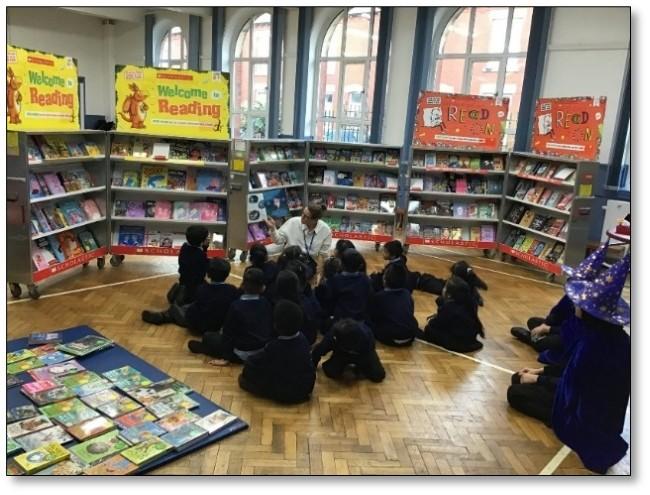
Reading for Pleasure
We place great importance on reading for pleasure, weaving it seamlessly into daily school life. Pupils immerse themselves in a wide range of texts—fiction, poetry, plays, and non-fiction—that reflect their own experiences while opening windows to new perspectives. Each year group celebrates the work of our Legendary Word Wizards—poets and authors whose writing inspires, challenges, and deepens literary knowledge.
Classrooms feature inviting reading corners, carefully stocked with age-appropriate books and refreshed regularly to spark curiosity and support independent choice. Word Wizard Reading Ambassadors champion books across the school, inspiring their peers and nurturing a vibrant reading community.
Our school library is a hub for exploration, offering themed collections and quiet spaces where children can lose themselves in stories. In Word Wizards’ Reading Workshops, adults model expressive reading while pupils take part in quizzes and mini-quests that bring texts to life. Children also track their journey in Reading Passports, working towards our “100 Books to Read Before Leaving Primary School.”
Early Reading and Strong Foundations
We prioritise early reading through a structured and inclusive approach. Children develop print knowledge, handwriting, and spelling, underpinned by daily phonics teaching using the Supersonic Phonic Friends programme. Through this, pupils build secure decoding skills, phonological awareness, and knowledge of grapheme–phoneme correspondence.
- Pupils practise with fully decodable texts matched closely to their phonics knowledge, with targeted support for those who need it.
- High-frequency and tricky words are taught systematically.
- Fluency is developed through guided, repeated, paired, and choral reading, including Reader’s Theatre.
- In EYFS, Book of the Week, Word of the Week, and the Poetry Basket develop story familiarity, vocabulary, and phonological awareness.
Early Guided Reading in EYFS & KS1
Guided Reading in the Early Years and Key Stage 1 provides structured small-group teaching to practise reading skills, build fluency, and develop early comprehension. Pupils learn to discuss, question, and enjoy texts, preparing them for longer texts and whole-class reading in Key Stage 2.
Sessions (30–40 minutes) follow a consistent structure:
- Introduction – The text is introduced, key vocabulary is pre-taught, and the focus for reading is established.
- Reading – Pupils read aloud or independently while adults listen, prompt, and support.
- Discussion – Children explore meaning, vocabulary, inference, and author intent through guided questioning.
- Plenary – Learning is summarised, strategies are reinforced, and next steps are identified.
Flexible grouping, carefully matched texts, and responsive adult support ensure that all children make strong progress and develop a positive relationship with reading.
Guided Reading in Key Stage 2
Our Key Stage 2 guided reading develops fluency, comprehension, and higher-order thinking through a structured and inclusive approach. Lessons begin by activating prior knowledge and explicitly teaching Tier 3 vocabulary, ensuring all pupils can access the text. Adults model fluent reading strategies from the Reader’s Theatre such as text marking, echo reading, and choral reading.
Pupils engage in paired and group reading, performing texts aloud to develop expression, confidence, and understanding. Re-reading and purposeful silent reading further strengthen fluency, stamina, and focus. Throughout lessons, we explicitly teach active reading strategies—including predicting, questioning, clarifying, visualising, summarising, and recognising text structure—drawing on research-informed approaches.
Comprehension is developed through VIPERS (Vocabulary, Inference, Prediction, Explanation, Retrieval, Summarising), supported by structured approaches such as Reading Gems, Reading Ladders, and the A.P.E. technique (Answer, Prove, Explain). Over time, pupils move from fluency and retrieval towards deeper thinking, including inference, explanation, and interpreting vocabulary in context, developing confident, reflective, and critical readers.
Parental Engagement
We recognise and value the important role families play in supporting children’s reading development, both by reading to them and listening to them read. Books are taken home daily alongside a reading record to encourage regular practice. Children are expected to read each day, with a comment recorded to support communication between home and school.
To strengthen the partnership between home and school, children in the Early Years and Key Stage 1 take home Bedtime Story Bags. Each bag includes a carefully selected book, a cuddly toy to share the story with, and simple writing materials. Families are encouraged to enjoy reading together and record their responses through drawing, writing, retelling, or simple crafts, helping to establish positive reading routines beyond the classroom.
Parental Support
Follow this advice to help primary-aged children read at home.
 |
Ten top tips for parents to support children to read |
Reading Curriculum Long Term Planning
Please select from the documents below.

|
Year 1 Core English, Poetry and Reading for Pleasure Texts | [pdf 129KB] |

|

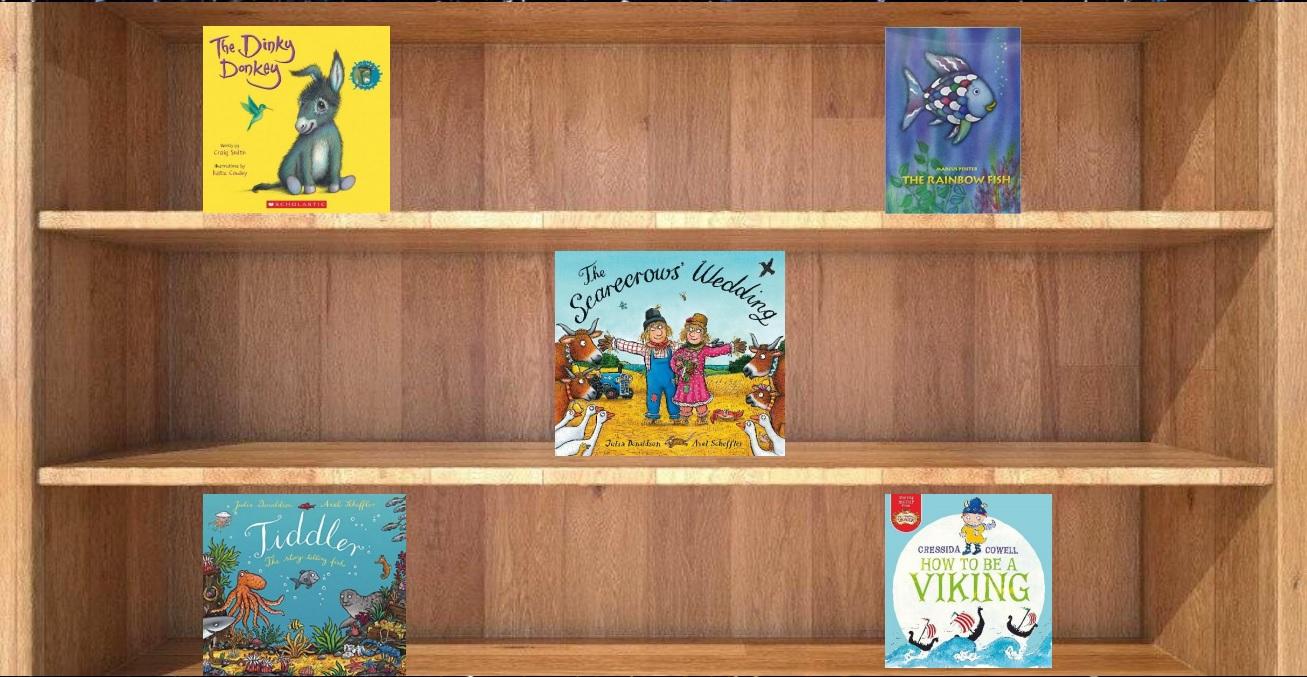
Recommended Reading Books - Nursery and Reception Classes
Please select the document below.
|
|
Reading Book List 2-4 Years | [pdf 166KB] |
|

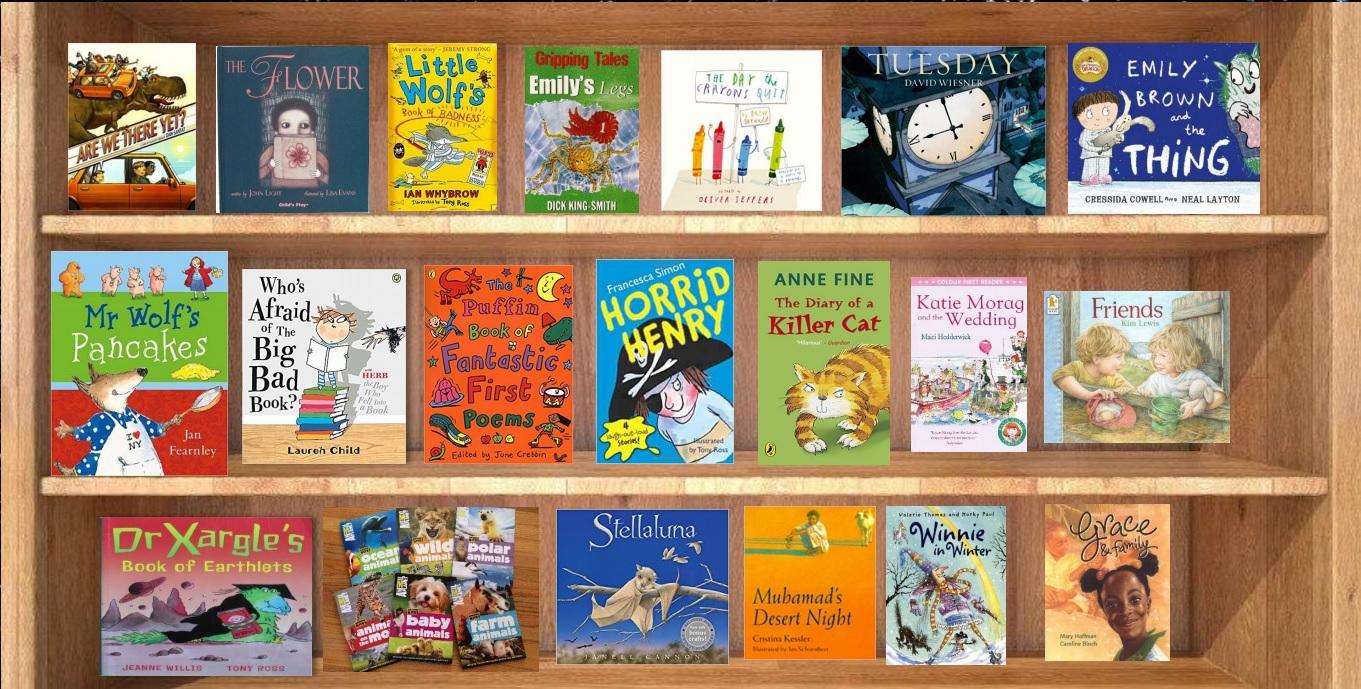
Recommended Reading Books - Reception, Year 1 and 2
Please select the document below.
|
|
Reading Book List 5-7 Years | [pdf 234KB] |
|
Recommended Reading Books - Years 3 and 4
Please select the document below.
|
|
Reading Book List 8-9 Years | [pdf 287KB] |
|
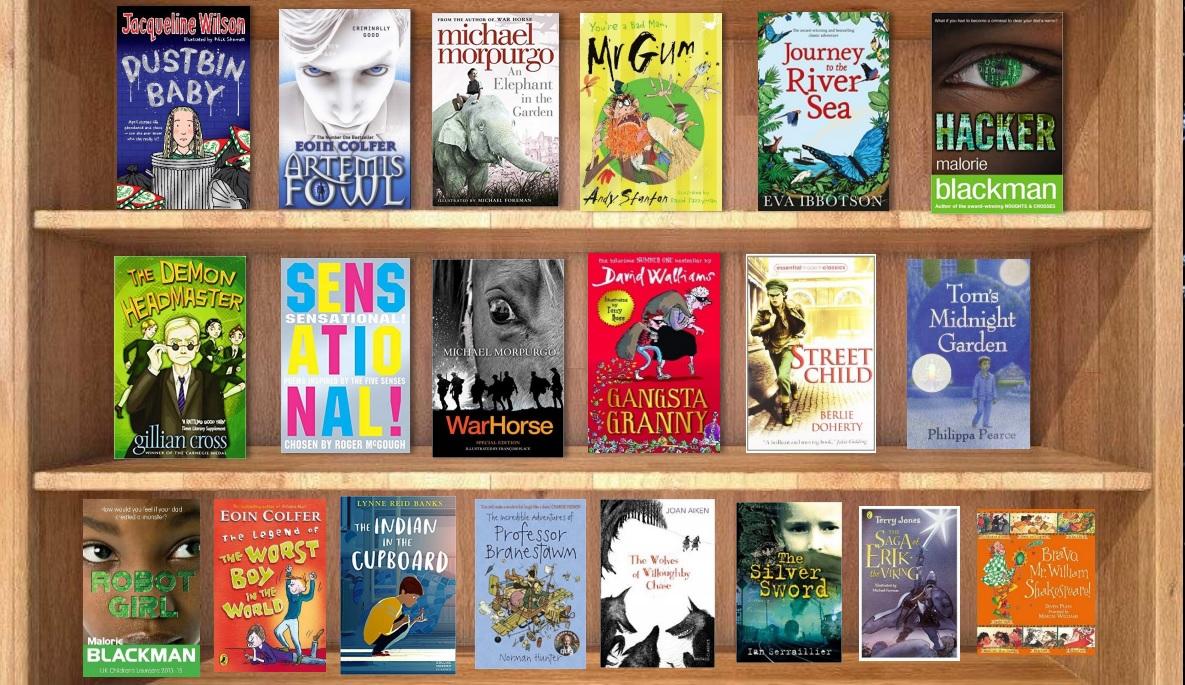
Recommended Reading Books - Year 4 and 5
Please select the document below.
|
|
Reading Book List 9-10 Years | [pdf 189KB] |
|
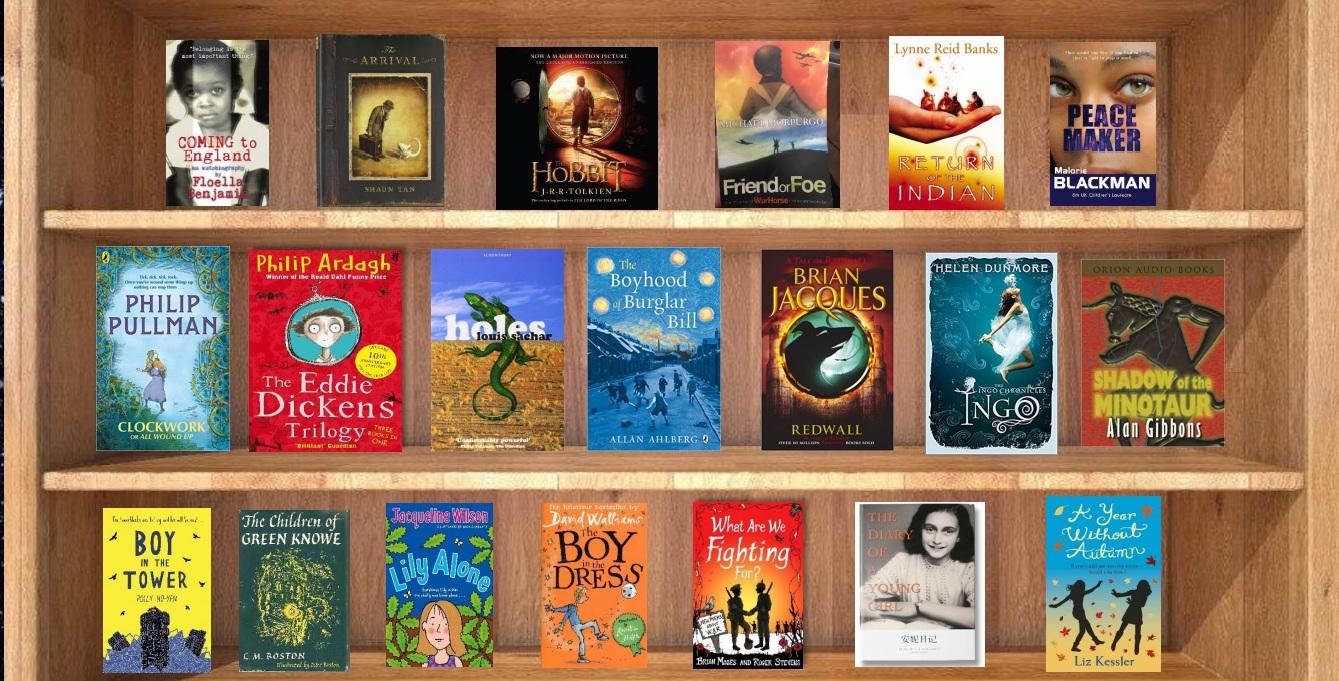
Recommended Reading Books - Year 5 and 6
Please select the document below.
|
|
Reading Book List 10-11 Years | [pdf 290KB] |
|
Oxford Owl Free eBooks
Please read the document below for a step by step guide to accessing free ebooks.
|
|
Oxford Owl eBook Library Parent Guidance | [pdf 191KB] |
|