
Year 4 Multiplication Tables Check
The purpose of the check is to determine whether your child can fuently recall their times tables up to 12, which is essential for future success in mathematics. It will also help your child’s school to identify if your child may need additional support. The check is an on-screen check consisting of 25 times table questions. Your child will be able to answer 3 practice questions before taking the actual check. They will then have 6 seconds to answer each question. On average, the check should take no longer than 5 minutes to complete.
 |
Information for Parents Multiplication Tables Check |
|
Government Information and Guidance - Multiplication Tables Check |
Timetable 2026
The 2026 Multiplication Tables Check (MTC) for Year 4 pupils in England will be administered over a 2 week period from Monday 1st June 2026, to Friday, 12th June 2026.
What is the test's format?
The Multiplication Tables Check has been described as “an online, on-screen digital assessment" – meaning the children will take the test on a desktop computer, laptop or tablet (such as an iPad) at school. The D for E are breaking a lot of new ground here – they have never administered computerised tests in primary schools before now. A further bonus for teachers and markers alike – the programme that the test runs on will automatically mark each child’s times tables test.
The times tables test will be timed, with the entire assessment lasting approximately 5 minutes in total. The children will be set a handful of practice questions to begin with – mostly from the one times table. Following the practice questions, the test itself will comprise of 25 questions, all formatted, for example, as 2 x 5 = with the child required to input the product or result, which in the example we’ve provided would mean inputting the answer 10.
Children will be given six seconds to answer each of the questions, with a three second blank gap between each question.
The questions will be randomly selected by the testing programme from 121 different options, ranging from 2 x 2 = up to 12 x 12. The test’s software has been programmed to show children more questions from the 6, 7, 8, 9 and 12 times tables, as these are trickier times tables focused on more in Years 3 and 4. (The 2s, 5s and 10s are more of a focus in Years 1 and 2.)
How will the Year 4 times tables test scores be reported?
Each child’s result will be passed on to their school, and the Deptment for Education will create a report on overall results across all schools in England to measure whether national times tables results improve over the coming years.
It is understood that most schools will not tell children their results or that parents will be informed either (but the DfE have yet to issue any advice to date).
One thing is for sure though – a school’s results will not be published in any public way, nor will they be used in informing any type of league or performance table.
What if my child does badly in their multiplication tables check?
No child will fail the times tables test as no pass mark has been set. It is also important to note that all children will be tested on is their times tables knowledge – with no problem solving skills being assessed and not even a single division question being asked!
Children in Year 4 will only be asked times tables questions, like 3 x 3 = 9.
What can you do to help your child in practising their times tables?
We would recommend a number of strategies to support your child in the run-up to and after the times tables test including:
- Times tables chanting: “6, 12, 18, 24…”;
- Times tables chanting in reverse order: “108, 99, 90, 81…”;
- Using times tables songs
- Using Times Table Rock Stars
- Using free online games
- Asking your child multiplication calculations out of order, like: “What is 4 x 7? What is 9 x 5? What is 6 x 11?”;
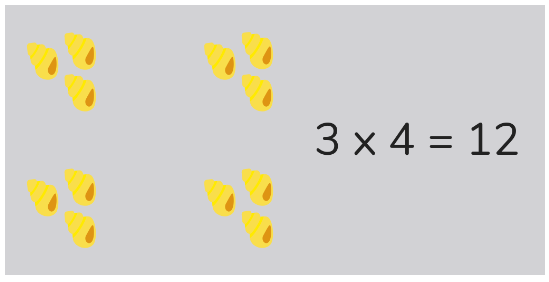
- Using pasta pieces or pebbles to show groups of numbers representing times tables, e.g. four groups of three pasta shells to show 3 x 4 = 12
