

|
Music Policy | Link |

|
St Hilda's Music Curriculum Statement
At St Hilda’s we recognise the importance of music education in school. Music supports children in early language acquisition which is vital for our children. Our community often has children who have English as an additional language. We use the Sparkyard scheme which not only teaches children to appraise and perform music but also the language of music. The language of music relates to the ability to read and understand notation and use technical subject specific vocabulary. Music doesn’t just help academically; it also improves the mental well-being of the children. We pride ourselves on delivering high quality and enjoyable music lessons.
Intent
At St Hilda’s C of E Primary School, we recognise the importance of Music in every aspect of daily life. We are aware of the high percentage of children in our school for whom English is an additional language. As a result of this, we have devised a music curriculum which best reflects their needs. Music supports the development of language acquisition. At St Hilda’s we are aware of the low levels of technical language that our children have in music. We aim to provide a curriculum which supports and develops both their technical language and their general language skills. We pride ourselves in providing a high quality music curriculum which sparks curiosity and we allow music to have the prominence it deserves.
At St Hilda’s we make music an enjoyable learning experience. We encourage children to participate in a variety of musical experiences through which we aim to build up the confidence of all children. Singing lies at the heart of good music teaching through reinforcing vocabulary, whether that be through gesture, rhythm or rhyme. Our teaching focuses on developing the children’s ability to sing in tune and with other people. Through singing songs, children learn about the structure and organisation of music. We teach them to listen to and appreciate different forms of music. As children get older, we expect them to maintain their concentration for longer, and to listen to more extended pieces of music. Children develop descriptive skills in music lessons when learning about how music can represent feelings and emotions. We teach children to make music together, to understand musical notation, and to compose pieces.
At St Hilda’s, in conjunction with the aims of the National Curriculum, our Music teaching will ensure;
- The programmes of study of the National Curriculum for music will underpin teaching and learning;
- Children will perform, listen to, review and evaluate music across a range of historical periods, genres, styles, cultures and traditions, including the works of the great composers and other musicians including contemporary musicians;
- Children will learn to sing and use their voices, to create and compose music on their own and with others, have the opportunity to learn a musical instrument, use technology appropriately and have the opportunity to progress to the next level of musical excellence;
- Pupils will be taught to use their voices expressively and creatively by singing songs and speaking chants and rhymes;
- All children will understand and explore how music is created, produced and communicated, including through the interrelated dimensions: pitch, duration, dynamics, tempo, timbre, texture, structure and appropriate musical notations.
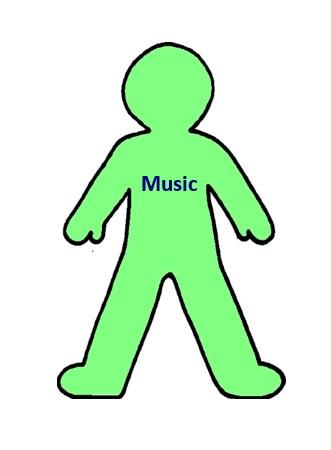
What a Musician looks like...
- To be a confident performer and enjoy being part of the musical journey.
- To listen to and appraise a variety of styles and of music.
- To understand and identify the features of a piece of music.
- To understand how our voices can be used as an instrument.
-
To play and perform using a range of instruments and your voice.
-
To appreciate a variety of live and recorded performances.
-
To develop and understand the history of music.
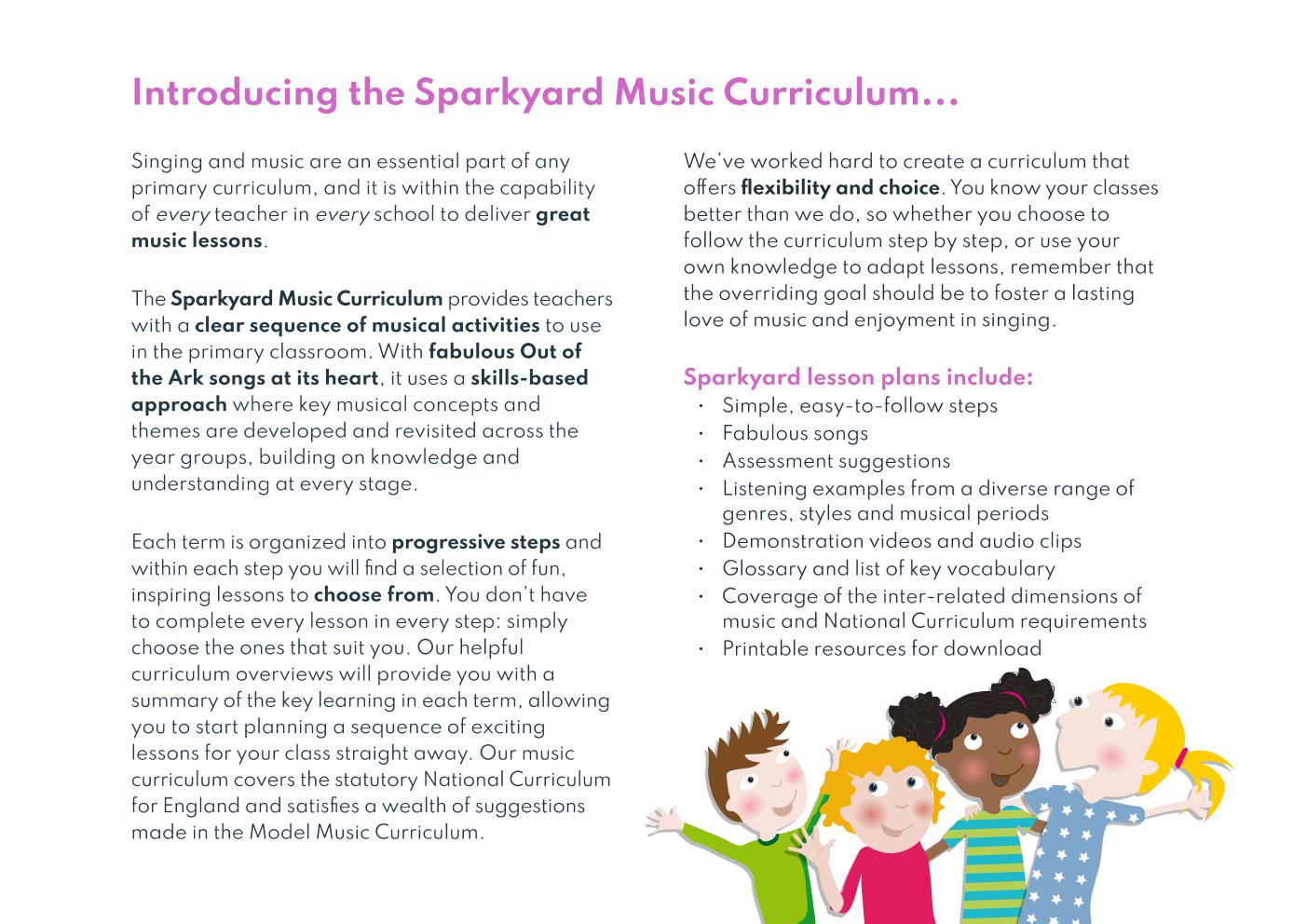
Sparksyard Music Curriculum
Please select the document beow.

|
Sparkyard Music Curriculum | [pdf 3MB] |

|
Musical Vocabulary Framework
Please select the document below.
|
|
Musical Vocabulary Framework | [pdf 2MB] |
|


Musical Vocabulary
Please select the document below.
|
|
Oldham Music Service Musical Vocabulary | [pdf 89KB] |
|
Musical Vocabulary
Please select from the documents below.
|
|
Year 1 Musical Vocabulary - Summer | [pdf 116KB] |
|
|
|
Year 2 Musical Vocabulary - Summer | [pdf 124KB] |
|
|
|
Year 3 Musical Vocabulary - Summer | [pdf 175KB] |
|
|
|
Year 4 Musical Vocabulary - Summer | [pdf 172KB] |
|
|
|
Year 5 Musical Vocabulary - Summer | [pdf 190KB] |
|
|
|
Year 6 Musical Vocabulary - Summer | [pdf 193KB] |
|
Music Development Plan
Please see the document below.
|
|
Music Development Plan 2025-26 | [pdf 144KB] |
|

The Power of Music
This document is a research paper based on the benefits of a music education. Please select the document below.
|
|
Power of Music Research | [pdf 1MB] |
|
Implementation
At St Hilda’s C of E Primary School:
Children have weekly lessons in Music throughout Key Stage 1 and 2, using the National Curriculum programmes of study and the Sparkyard music scheme. The scheme includes knowledge organisers which ensure the coverage of sticky knowledge is being taught throughout school. The children can access the knowledge organisers and are aware of where their musical journey will take them. Teachers create a positive attitude to Music learning within their classrooms and reinforce an expectation that all children are capable of achieving high standards in Music. Our whole school approach to the teaching and learning of Music involves the following:
- Children will be taught a weekly music session of between 20 minutes and an hour. They will be taught using the Sparkyard music scheme, which is a whole school approach to teaching and learning in music;
- Children will be taught how to play tuned and un-tuned instruments musically and perform in solo or ensemble contexts, using their voices and playing musical instruments with increasing accuracy, fluency, control and expression;
- Teachers will provide children with the opportunity to experiment with, create, select and combine sounds using inter-related dimensions of music;
- Children will be taught how to improvise and compose music for a range of purposes using the inter related dimensions of music;
- Teachers will model listening and appraising skills and provide children with the opportunity to understand a range of high quality live and recorded pieces of music;
- Pupils will be taught how to pay attention to detail and recall sounds with increasing aural memory;
- Children will use and understand musical notation;
- Teachers will help children to appreciate and understand a wide range of high quality recorded and live music drawn from different traditions and from great composers and musicians as they develop an understanding of the history of music.
Ensemble Music Session - Glockenspiel Unit 1
Please select the document below.
|
|
Ensemble Music Session - Glockenspiel Unit 1 | [pdf 1MB] |
|
Music Curriculum in Pictures
Please click on the picture link to see how the curriculum is taught at St Hilda's School.

Example Knowledge Organiser
Please select from the documents below.
|
|
Year 3 Knowledge Organiser - Music - Painting Pictures With Sound | [pdf 270KB] |
|
|
|
Year 5 Knowledge Organiser - Music - Music and Words | [pdf 269KB] |
|
|
|
Year 6 Knowledge Organiser - Music - Musical Effects and Moods | [pdf 202KB] |
|
Example Planning Documentation
Please select from the documents below.
|
|
Year 1 Music Lesson Plan | [pdf 114KB] |
|
Impact
All pupils will benefit from a high quality music education which will engage and inspire pupils to develop a love of music and their talent as musicians. It will increase their self-confidence, creativity and sense of achievement. As pupils progress, they will develop a critical engagement with music, allowing them to enjoy a wide and rich range of music. Furthermore, our music curriculum will allow children to become high quality performers through solo and ensemble performances. Our curriculum will also allow the children to develop compositional skills which will spark their interest and curiosity.
Equal Impact Assessment
All children have equal access to the Music curriculum and its associated practical activities. The SLT, Class Teachers and TAs at St Hilda’s Primary School are responsible for ensuring that all children, irrespective of gender, learning ability, physical disability, ethnicity and social circumstances, have access to the whole curriculum and make the greatest possible progress. Where appropriate, work will be adapted to meet pupils’ needs and, if appropriate, extra support given. More able pupils will be given suitably challenging activities. Gender and cultural differences will be reflected positively in the teaching materials used.
All children have equal access to the Music Curriculum, its teaching and learning, throughout any one year. This is being monitored by analysing through class book scrutiny throughout the school.

National Curriculum - Music
 |
KS1 and KS2 Music Curriculum |
